Speed to Lead: Why Responding in 60 Seconds Wins More Local Jobs
Most local business owners think their marketing problem is "not enough leads." Often, the bigger problem is what happens in the first few minutes after a lead comes in.
A homeowner fills out a form for a roof inspection. A new patient submits a request on your website. Someone sends a DM asking about pricing. Each of them is probably contacting two or three other businesses at the same time.
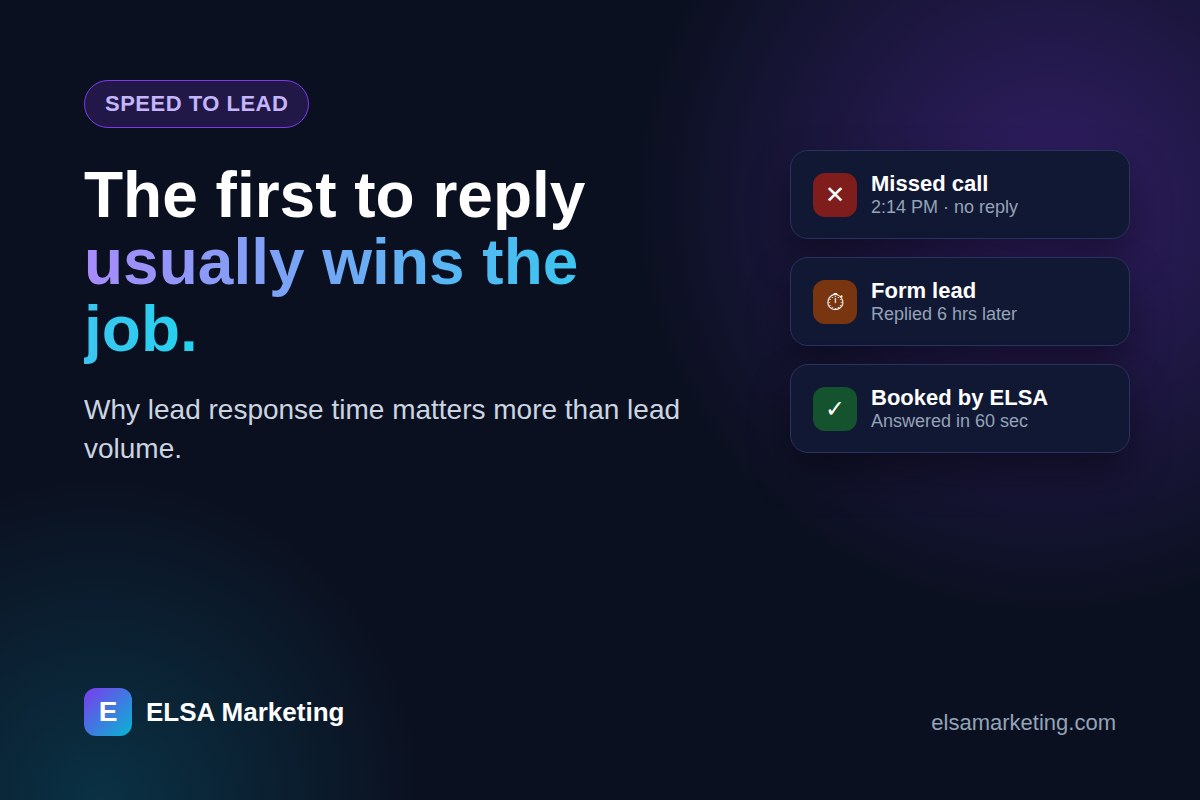
The one who responds first usually gets the conversation, and the conversation usually gets the job.
What the research says
Speed to lead isn't just a sales slogan. In a widely cited Harvard Business Review study, "The Short Life of Online Sales Leads" (2011), researchers looked at how quickly thousands of U.S. companies responded to web leads. They found that companies that tried to contact a lead within an hour were nearly 7 times as likely to qualify that lead as companies that waited longer, and far more likely than companies that waited a day or more.
That study is about an hour. Today, customers expect even faster. They're used to instant replies from apps and online stores, and they search on their phones while they're still thinking about the problem.
Why local businesses respond slowly
It's rarely because owners don't care. It's because:
- You're doing the work. A contractor on a job site or a stylist with a client can't stop to reply.
- Leads come in after hours. Evenings and weekends are when many homeowners finally have time to search.
- Leads come from too many places. Calls, texts, website forms, Facebook, Instagram, Google. It's easy for one to slip.
- Follow-up depends on memory. "I'll call them back after this job" turns into tomorrow.
What "fast" should look like
Here's a simple standard to aim for:
| Lead source | Target response |
|---|---|
| Missed phone call | Text back within 1 minute |
| Website form | Text or call within 1-5 minutes |
| Facebook/Instagram message | Reply within 5 minutes |
| After-hours lead | Instant reply + booking link or booked time |
If a human can't hit those targets every time, automation should.
How to respond in about 60 seconds, every time
Connect every lead source to one place
Your calls, texts, forms and social messages should land in one inbox, not five apps. That way nothing gets lost and you can see every conversation.
Reply instantly, then qualify
The first reply should be fast and human: acknowledge the request, ask one simple question, and offer to book. An AI assistant can handle this automatically, any time of day, and collect the details you care about (service needed, address, timing).
Book, don't just "follow up"
The goal of a fast response isn't to say hello. It's to get the appointment on the calendar while the customer is still interested. Offer specific times or let the assistant book directly into your calendar.
Keep following up if they go quiet
Some people won't reply the first time. A short, polite follow-up sequence over the next few days (text, then email, then text) recovers a lot of leads that would otherwise be forgotten.
Speed beats more ad spend
If you double your ad budget but still respond hours later, you're paying for more leads to go cold. Fixing response time first means every dollar you already spend on marketing works harder.
How ELSA Marketing helps
ELSA Marketing builds lead follow-up automation and an AI receptionist that responds to every call, text, form and DM in about 60 seconds, then books qualified appointments on your calendar. We also run Google and Meta ads on a Pay Per Client model, with no monthly retainer.
Curious how fast you really respond? Take the free 60-second Missed-Lead Audit or call us at (404) 882-7810.